
Happy Mother's Day. Big Sale Up to 40%
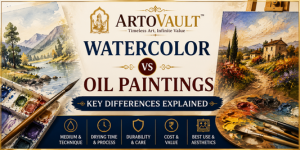
Both mediums have captivated audiences for centuries, producing timeless masterpieces that adorn museums and private collections around the world. While each offers unique visual appeal and artistic possibilities, they differ significantly in technique, texture, durability, and maintenance.
Whether you're planning to create your own artwork or invest in original paintings, understanding these differences will help you make an informed decision.
Watercolor paintings are created using pigments mixed with water and applied to specially designed watercolor paper. The transparency of the paint allows light to reflect through the layers, giving watercolor artworks their distinctive luminous and delicate appearance.
Watercolors are often chosen for:
The medium is admired for its softness, fluidity, and ability to capture subtle details.
Oil paintings use pigments suspended in drying oils, traditionally linseed oil. Artists typically paint on stretched canvas, wooden panels, or specially prepared surfaces.
Oil painting is known for its:
Many of the world's greatest masterpieces, including works by Leonardo da Vinci, Rembrandt, and Vincent van Gogh, were created using oil paints.
| Feature | Watercolor | Oil Painting |
|---|---|---|
| Medium | Water-based pigments | Oil-based pigments |
| Surface | Watercolor paper | Canvas or wood panel |
| Appearance | Transparent and soft | Rich, vibrant, textured |
| Drying Time | Minutes to hours | Days to weeks |
| Texture | Usually smooth | Can be heavily textured |
| Corrections | Difficult | Easier due to slow drying |
| Durability | Requires careful framing | Extremely durable when properly maintained |
| Cost | Generally more affordable | Often more expensive |
Watercolor paintings are celebrated for their:
They create a sense of elegance and spontaneity that is difficult to replicate with other mediums.
Oil paintings offer:
The slow drying nature of oils allows artists to blend colors seamlessly and create intricate details.
One of the biggest differences lies in drying speed.
Oil paintings generally last longer because of their durable paint film and protective varnish.
Watercolor paintings are also long-lasting but require:
When preserved correctly, both mediums can survive for centuries.
Watercolor paintings are often:
Oil paintings generally command higher prices because:
However, the value of any artwork ultimately depends on the artist's reputation, originality, rarity, and craftsmanship.
For aspiring artists:
Pros:
Challenges:
Pros:
Challenges:
The answer depends on your personal preferences.
Choose watercolor paintings if you appreciate:
Choose oil paintings if you prefer:
Many experienced collectors include both mediums in their collections to enjoy the unique qualities each offers.
Before purchasing, consider:
Original artwork should evoke emotion and complement your living or working environment.
Both watercolor and oil paintings have earned their place in the world of fine art. Watercolors charm viewers with their lightness, transparency, and graceful simplicity, while oil paintings impress with their depth, texture, and timeless richness. Neither medium is inherently superior—the best choice depends on your artistic preferences, budget, and intended use.
Whether you're an artist exploring different techniques or a collector searching for your next masterpiece, understanding these key differences will help you appreciate the beauty and craftsmanship behind each form of artistic expression.
Oil paintings are generally more durable, but properly preserved watercolor paintings can also last for centuries.
In many cases, yes. Oil paintings often involve higher material costs and longer creation times, though pricing also depends on the artist and artwork.
Yes. Watercolor paintings should be framed behind protective glass to shield them from dust, moisture, and UV light.
Watercolors are simpler to set up and clean, while oil paints allow easier corrections because they dry more slowly. The better choice depends on individual learning preferences.
Both are valuable additions to an art collection. Watercolors are prized for their elegance and subtlety, while oil paintings are admired for their richness, texture, and longevity.
Discover expert insights, collecting guides, conservation tips and inspiring stories from the fascinating world of fine art.























Jacky Chan
Since 2012
Lorem ipsum dolor sit amet consectetur adipisicing elit.
December 4, 2020 at 3:12 pm
ReplyAna Rosie
Since 2008
Lorem ipsum dolor sit amet consectetur adipisicing elit.
December 4, 2020 at 3:12 pm
ReplySteven Keny
Since 2010
Authentic and Beautiful, Love these way more than ever expected They are Great earphones
December 4, 2020 at 3:12 pm
Reply