
Happy Mother's Day. Big Sale Up to 40%
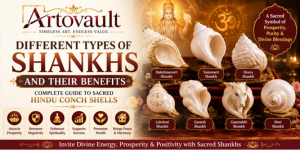
It is not merely a ritual object but a symbol of purity, prosperity, divine energy, and protection. The sound of a Shankh is believed to purify the surroundings, remove negative vibrations, and invite positive cosmic energies.
According to Hindu scriptures, Lord Vishnu carries the divine conch Panchajanya, while Goddess Lakshmi is believed to reside where sacred Shankhs are worshipped with devotion.
There are several varieties of Shankhs, each possessing unique spiritual importance and believed to offer specific benefits. Understanding these different types helps devotees choose the one that best aligns with their spiritual and personal goals.
The Shankh symbolizes:
The sacred sound produced by blowing a Shankh is believed to resemble the primordial vibration "Om", making it an essential part of Hindu worship.
The Dakshinavarti Shankh is one of the rarest and most auspicious conch shells. Its opening turns towards the right side, unlike ordinary conches.
It is generally worshipped rather than blown.
The Vamavarti Shankh opens towards the left and is the most commonly found conch shell used in Hindu rituals.
This is the traditional Shankh blown during religious ceremonies.
The Heera Shankh is considered a highly auspicious and rare conch, admired for its unique appearance and spiritual significance.
Many devotees keep a Heera Shankh in their home altar as a symbol of abundance and divine blessings.
The Lakshmi Shankh is closely associated with Goddess Lakshmi, the deity of wealth and abundance.
It is especially worshipped during Diwali and Lakshmi Puja.
The Ganesh Shankh resembles the trunk of Lord Ganesha and is considered highly auspicious.
It is often worshipped before beginning important life events.
The Gaumukhi Shankh resembles the face of a sacred cow.
The Moti Shankh has a smooth, pearl-like appearance and is regarded as a symbol of purity.
The Panchajanya is the divine conch of Lord Vishnu, described in the Mahabharata and other sacred texts.
Although the original divine conch is not available for worship, replicas are revered by devotees.
Generally, Vamavarti Shankhs are used for blowing during worship and religious ceremonies.
Some auspicious Shankhs, such as Dakshinavarti Shankhs, are traditionally worshipped rather than blown due to their sacred significance.
Always follow the guidance provided with the Shankh or consult a knowledgeable priest if unsure.
A properly worshipped Shankh is traditionally believed to:
Blowing a conch shell involves controlled breathing, which may help improve lung capacity and respiratory muscle strength. The resonant sound can also create a calming atmosphere during prayer or meditation.
While these observations are practical, the spiritual benefits traditionally associated with Shankhs arise from religious beliefs and long-standing cultural practices.
Your choice depends on your purpose.
| Purpose | Recommended Shankh |
|---|---|
| Daily Puja | Vamavarti Shankh |
| Wealth & Prosperity | Dakshinavarti Shankh |
| Business Growth | Lakshmi Shankh |
| Obstacle Removal | Ganesh Shankh |
| Spiritual Practice | Gaumukhi Shankh |
| Positive Energy | Heera Shankh |
| Peace & Harmony | Moti Shankh |
Shankhs are among the most sacred symbols in Hindu tradition, representing divine blessings, purity, and auspiciousness. Whether used in daily worship, temple rituals, or kept as a sacred object in the home, each type of Shankh carries its own unique symbolism and traditional significance.
Choosing the right Shankh depends on your spiritual aspirations and devotional practices. When worshipped with faith, reverence, and sincerity, a Shankh becomes more than a ritual object—it serves as a reminder of divine presence, inner peace, and the timeless spiritual heritage of Sanatana Dharma.
The Dakshinavarti Shankh and Lakshmi Shankh are traditionally associated with prosperity and financial abundance.
No. While Vamavarti Shankhs are commonly blown during worship, certain sacred varieties, such as Dakshinavarti Shankhs, are generally worshipped rather than blown.
A Shankh should be kept in a clean and respected place, preferably in the puja room or on a dedicated altar.
Yes. Many devotees keep different Shankhs for different devotional purposes, provided they are maintained respectfully.
Yes. A sacred Shankh is considered an auspicious gift for occasions such as housewarmings, weddings, festivals, and religious ceremonies.
Discover expert insights, collecting guides, conservation tips and inspiring stories from the fascinating world of fine art.













Jacky Chan
Since 2012
Lorem ipsum dolor sit amet consectetur adipisicing elit.
December 4, 2020 at 3:12 pm
ReplyAna Rosie
Since 2008
Lorem ipsum dolor sit amet consectetur adipisicing elit.
December 4, 2020 at 3:12 pm
ReplySteven Keny
Since 2010
Authentic and Beautiful, Love these way more than ever expected They are Great earphones
December 4, 2020 at 3:12 pm
Reply